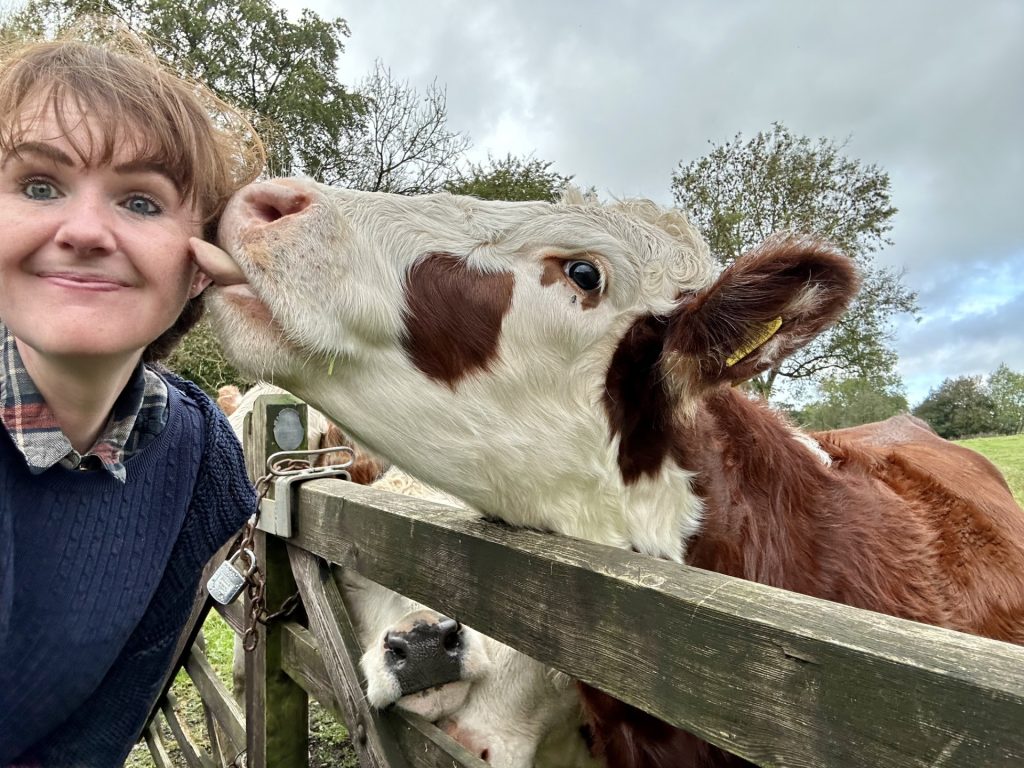
We run a closed herd of native breed suckler cattle on upland rented ground in Leek, Staffordshire Moorlands. Our journey into cattle started with calves; Ma began by bringing home dairy-bred bull calves from the dairy farms she worked on and rearing them. She then started to rear on dairy-bred heifers, buying and selling them at Leek Market, before starting a suckler herd from scratch, which could only be possible after securing rented ground and cattle shed for overwintering cows.
Hereford
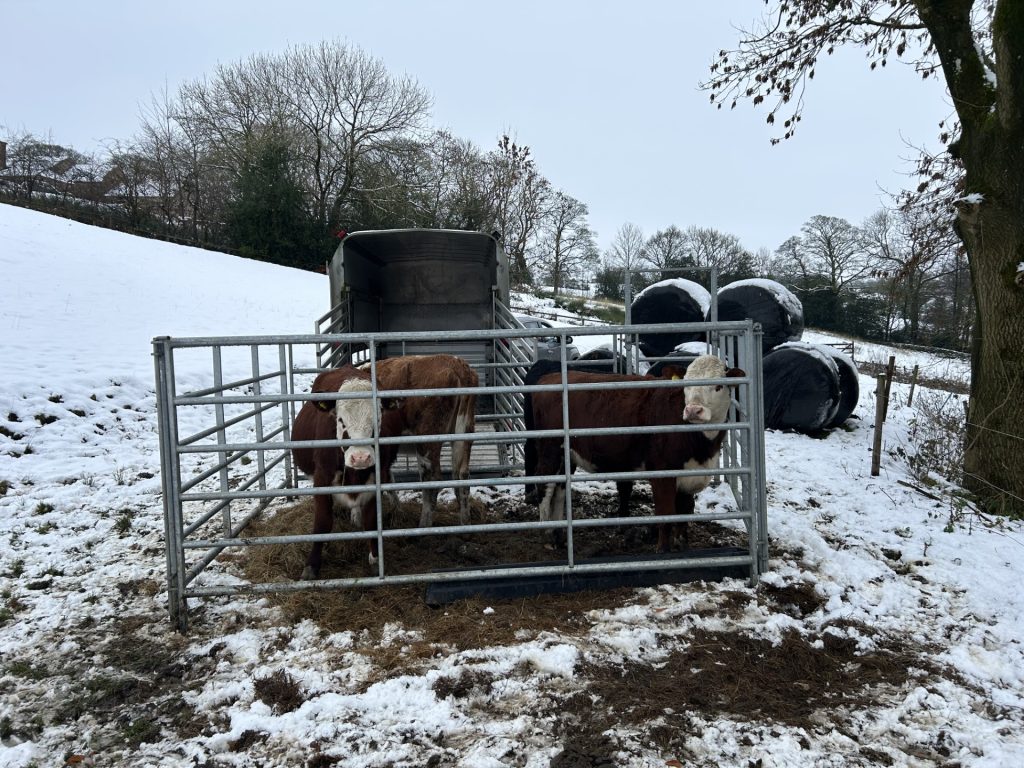
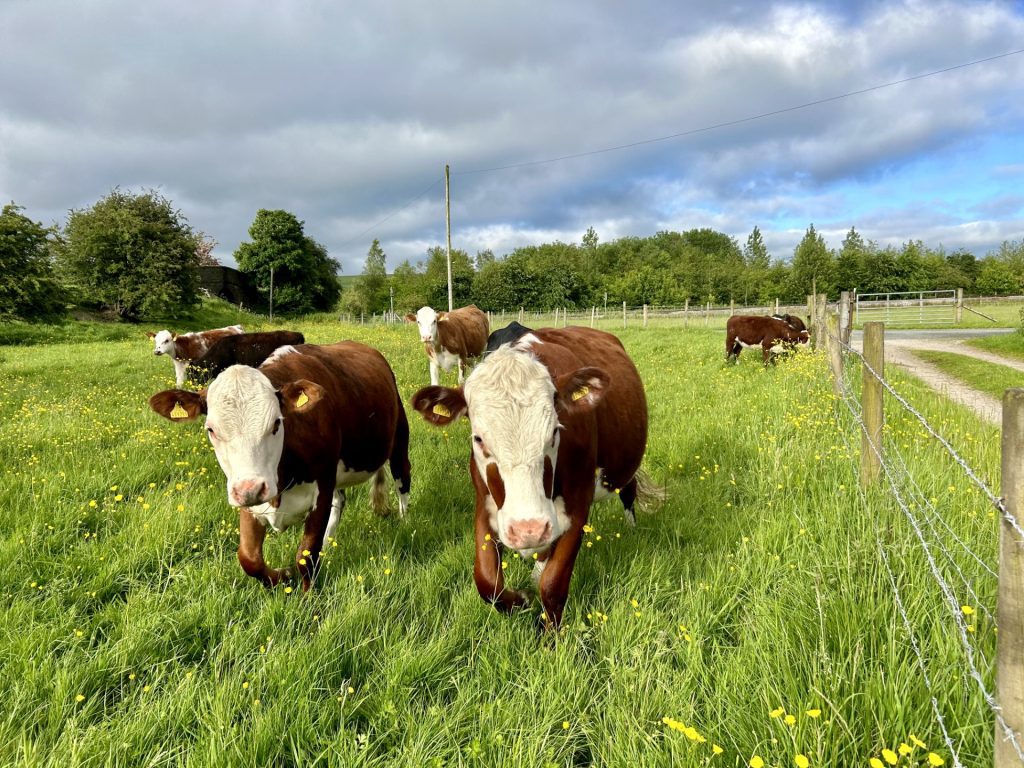
We keep predominantly Hereford cattle, as these hardy, resilient and docile breeds suit the land and also our traditional, low-input approach to farming. According to the Hereford Cattle Society, the Hereford cow originates from Herefordshire, West Midlands, through selective breeding in the mid-18th Century and is now recognised worldwide as a hardy, productive animal that produces superior beef. The breed is now recognised as a native British breed, according to the Rare Breed Society Trust. Native breeds such as the Hereford are well-suited to conservation grazing due to their smaller frame and grazing style, munching, nibbling and fertilizing as they go; to improve biodiversity and make a space for nature.
Our Values
Based in the Staffordshire Moorlands as an upland, tenant farming family, we farm with 2 priorities;
- high animal welfare featuring low-stress handling methods and traditional, natural cattle care as much as possible. We aim to calve down in Spring to combine the spring grass growth with lactating cows and growing calves, and do not routinely worm our cattle, instead keep a herd health plan featuring vaccination, preventative care and regular FEC (fecal egg count) sampling.
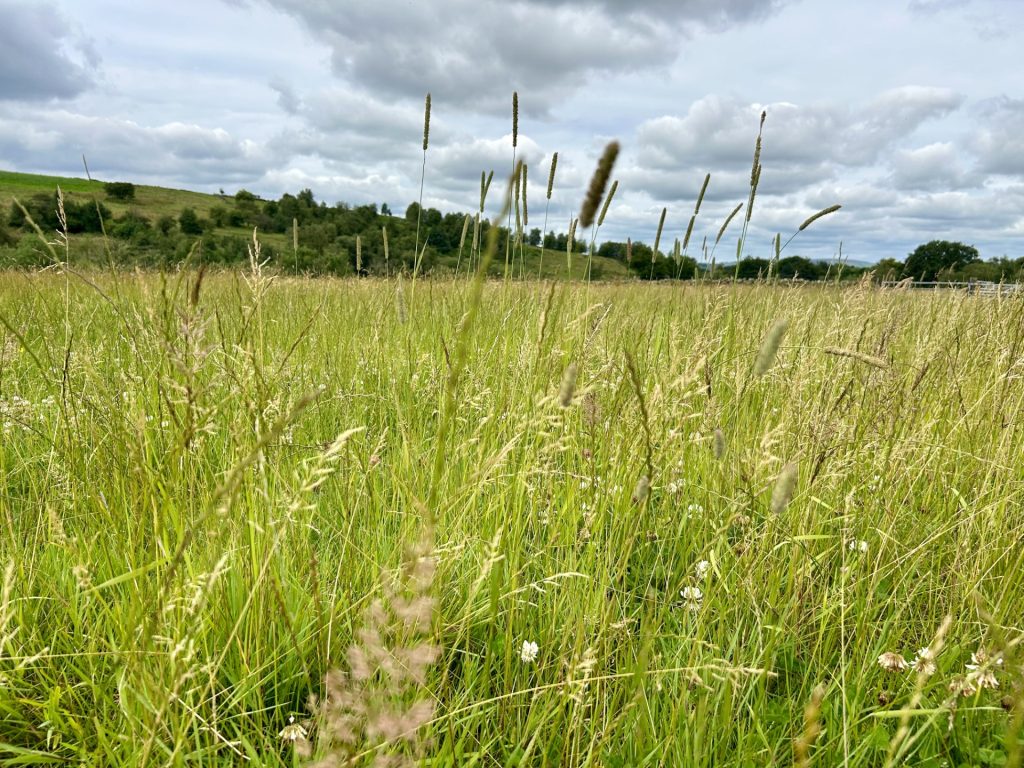
- a nature-friendly approach: use of herbivores in managing grasslands. Cattle graze species-rich grasslands. The farm is an ecosystem, supporting habitat for nature, wildlife, birds, and invertebrates, as well as environmentally conscious food production to produce low-carbon, highly valuable, nutrient-dense beef.
Cows are great, but
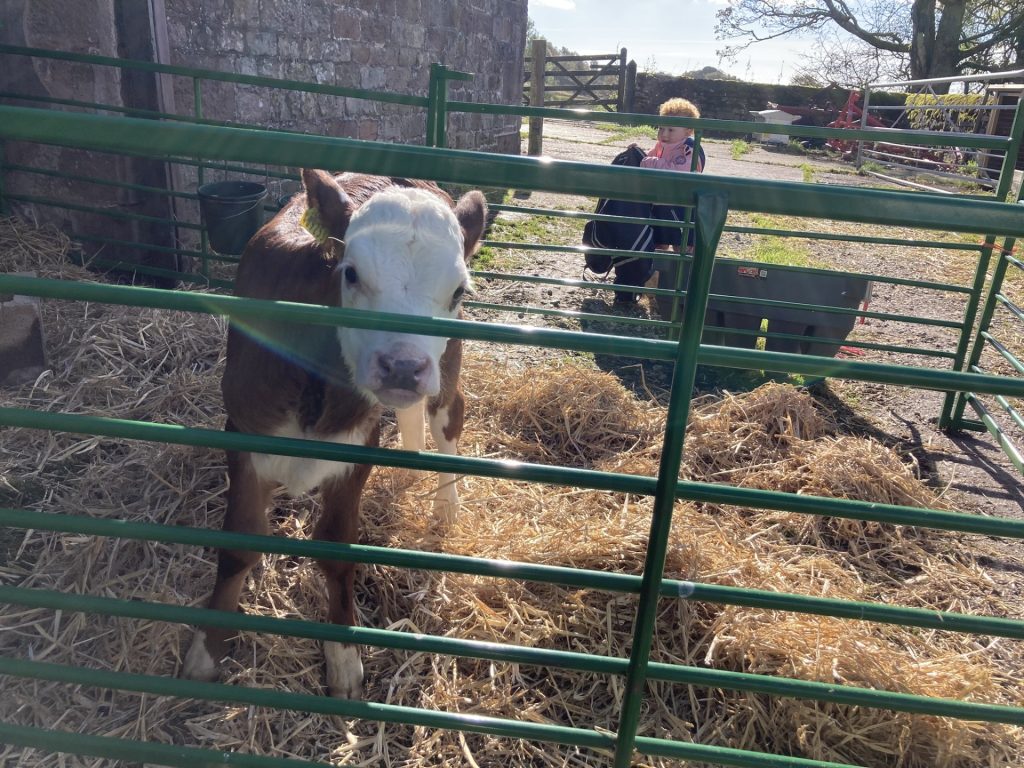
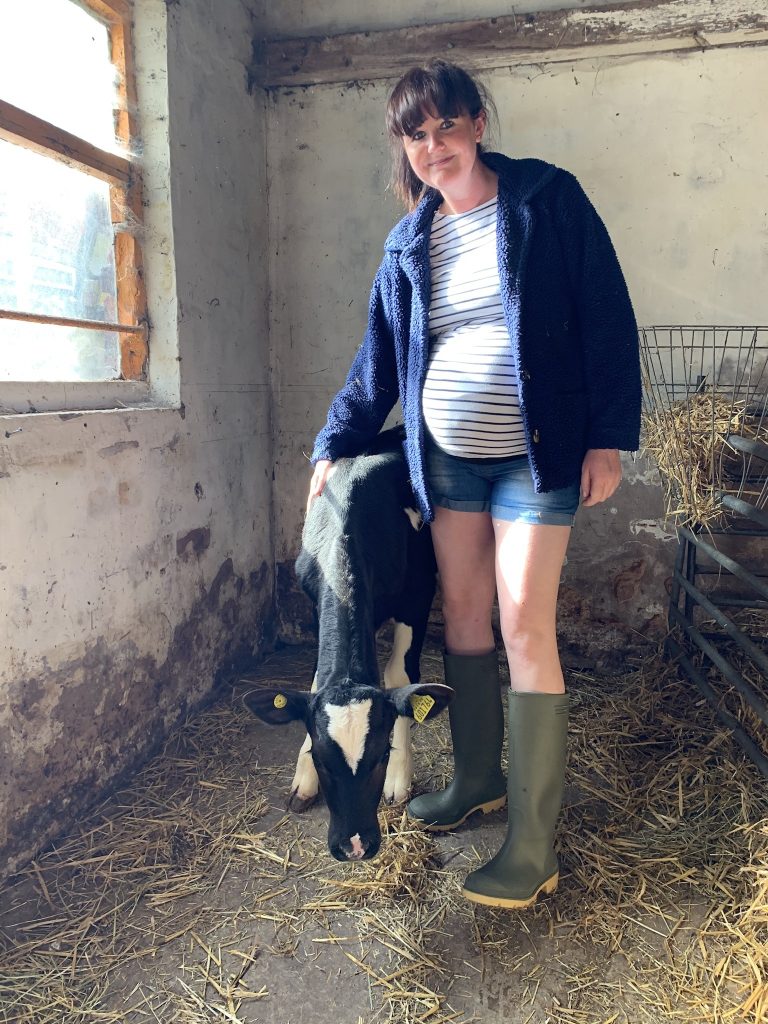
Cows are great, however for a first-generation farmer like ourselves starting out from scratch – it’s a very resource heavy enterprise. Sheep are excellent for a new-entrant farmer because you can keep a flock of sheep with very little kit and virtually no infrastructure. Obviously, cows require a bit more thought, investment, and kit. Hence, we began with calf rearing, which we could do in outbuildings at home. The last batch of calves that Ma reared on were 4 Hereford cross heifer (female) calves that were purchased from Leek Market in September 2022 aged 7-10 days old, and were retained as the original 4 for the suckler herd. Now, aged two years old and named “The Julies”, they are somewhat of our favourites. (If a little on the overly friendly side!). The rest of the suckler herd are suckler-bred and graze species-rich upland grassland and hay meadows on a rented ground in the Peak District.
Low input, traditional methods
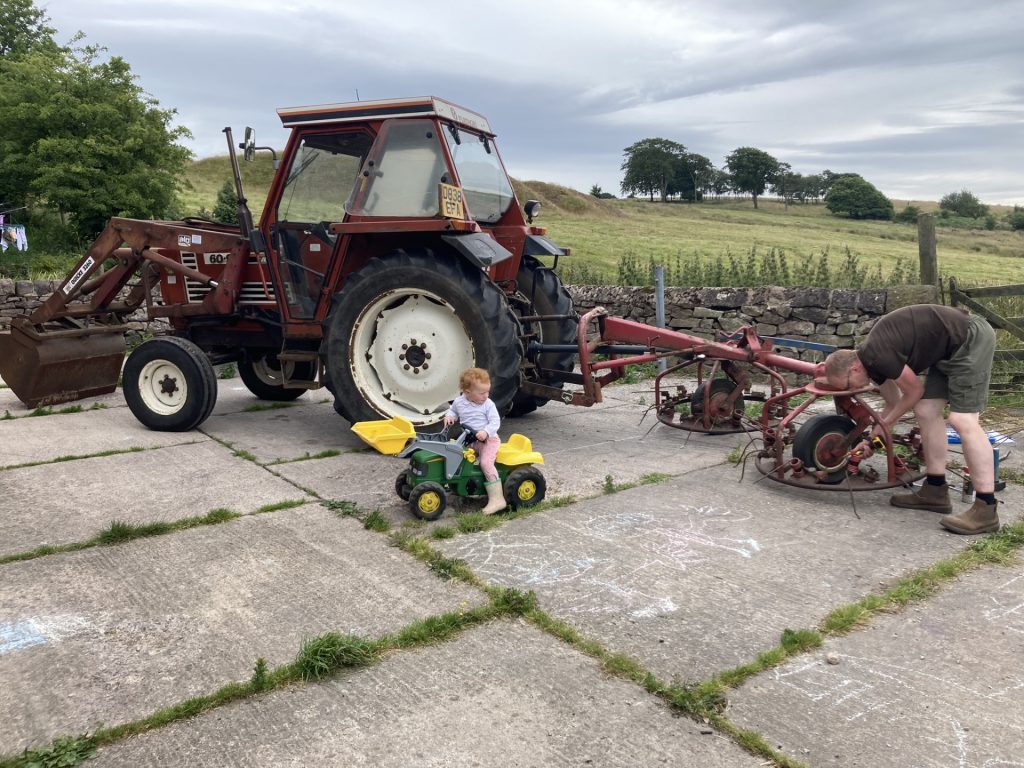
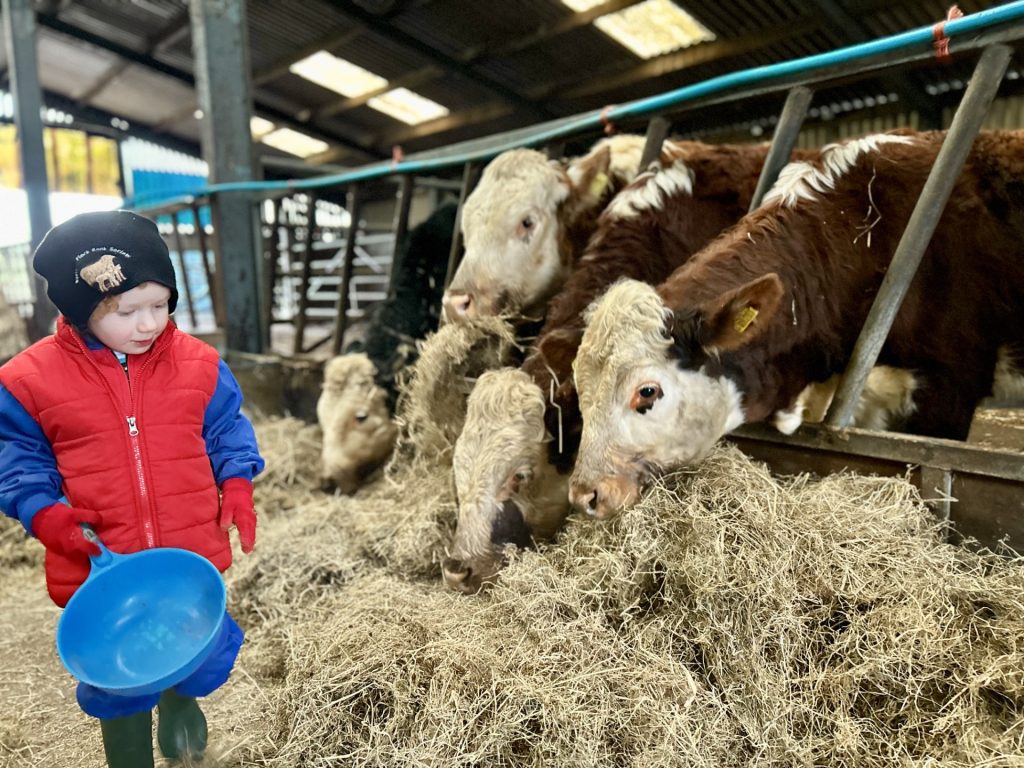
We run the herd on a low input, traditional system, with the aim of producing beef boxes that are from animals reared to high standards of welfare, and farmed in a nature-friendly, sustainable approach at all times. We take one hay cut per year of field-dried, species-rich hay, made in-house by ourselves with our small, very old tractor, mower, tedder and baler. Haymaking is a family affair, and made with pride by us all.
With being a tenant farmer, and an upland one at that, it is essential that we are careful and resourceful. In order to keep costs down, many of the farming tasks are completed in-house, with Ma self-funding training courses in cattle foot trimming, AI (artificial insemination) and calf rearing.
No Bull
We do not keep a bull on the farm – with a small number of cattle, we do not require one year-round. Most importantly, with public footpaths running through the farmland we rent, we believe it is a safer decision. Artificial insemination allows us to choose the desired breed for the heifer cows, and allows us to keep biosecurity a priority as AI reduces the risk of sexually transmitted diseases to our cows.
All of our maiden heifers are served by Angus Aberdeen, a smaller breed of cattle and one that the cows will be able to calve themselves without many interventions from us or the vet. We chose to run hardy, resilient and native breeds best suited to the upland grazing we farm. Herefords are a British breed of cattle, with a docile and even temperament and smaller in size than commercial breeds of suckler, meaning that they are effective grazers of moorland and upland, as well as lighter on the ground, which can be wetter than the low lands.
Great Teammates
They are a pleasure to work with and play a valuable role as herbivores in landscape and nature preservation. Livestock are not machines. They don’t create a uniform and monotonous habitat. Still, their selective feeding and behaviour enable a patchwork of microhabitats that benefit a wider range of animals, from fungi to plants, insects to reptiles, birds to mammals.