Not Just A Buzz Word:
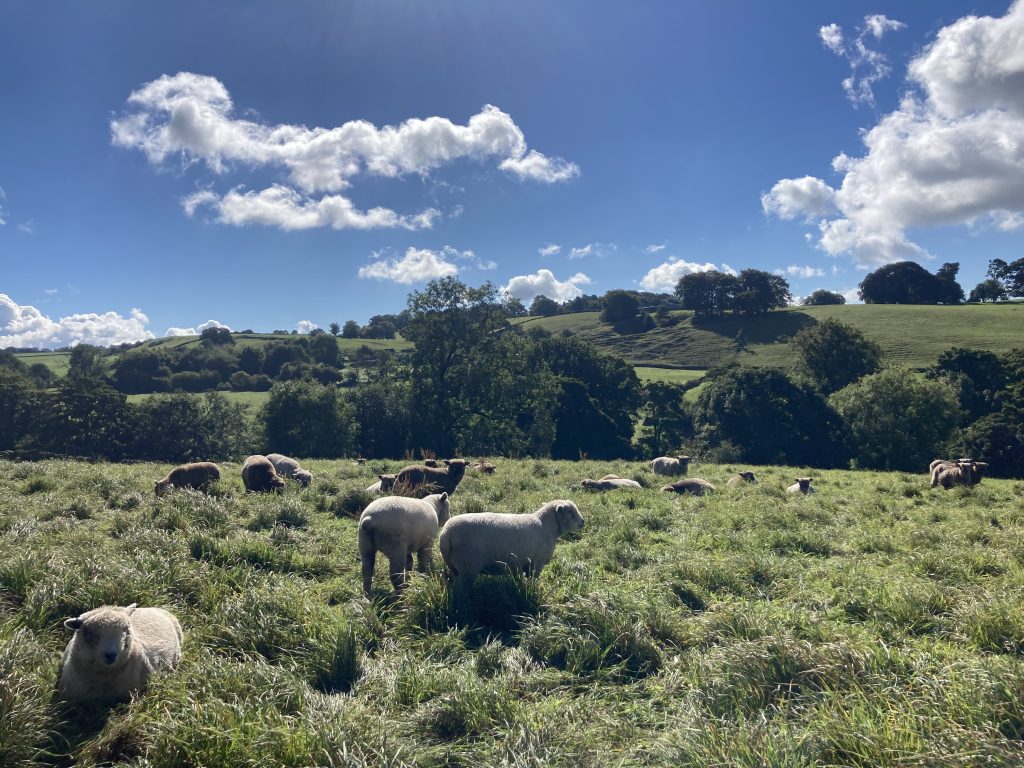
Nature-friendly farming (often also called sustainable, regenerative or eco-friendly farming) is essentially farming in a manner that cooperates and works with nature – rather than against it. As first-generation tenant farmers, farming upland land, it has always been the best fit for our farming system, the animals that we keep, and aligns most with our own personal aims and plans for higher standards of animal welfare, conservation of species-rich grasslands & hay meadows and serving our community with affordable, nutrient-dense meat and eggs from native, hardy breeds.
The How and The Why:
Nature-friendly farming uses an extensive, low-input approach to agriculture and food production, ensuring that there are many spaces for nature to thrive alongside. It means not fighting against nature – rather to try and work in harmony with its natural cycles and seasons in a more holistic manner. Methods used aim to protect soil health, water sequestration, air quality and biodiversity, whilst still producing wholesome, healthy food and supporting farmers’ livelihoods. Some of our key practices that we incorporate here on the farm include the following:
- No ploughing or tilling land to protect soil structure and microbes, as well as storing carbon and water – promoting resilience against climate change.
- Composting of all farm yard muck (cow’s dung & straw bedding) before spreading onto the land which helps to improve soil health naturally.
- An organic approach to farming which includes refraining from the use of artificial or synthetic fertilisers and pesticides. (Docks, thistles & rushes are sprayed with a knapsack sprayer/weed wiper to control their dominant growth and only outside of the ground-bird nesting season).
- We harvest one crop of field-dried hay annually in July or August (after the wildflowers have seeded and the ground-nesting birds such as curlews have fledged) from the farm’s hay meadows which is used to feed our cattle and sheep over winter. Meadows are mown from the inside out, allowing wildlife and insects to escape with borders of at least 1.5metres are left and hay meadows are aftermath grazed around September by our small herd of native cattle.
- We adhere to lower stocking rates and regularly rest the fields inbetwwen grazing.
- We work in partnership with our landlord, the Peak District National Park Authority and their ecologist, as well as Staffordshire Wildlife Trust and are hoping to join the Morridge Hill Landscape Recovery Project which will offer a joined up, multi-collaborative approach to landscape recovery and nature-friendly farming next year – watch this space.
- We invite others to learn about where their food comes from, amd how we work with nature to produce it through school educational access visits and open days where customers are welcomed to the farm to collect thier meat boxes and join us for a cuppa and a chat.
- Avoiding blanket use of antibiotics and anthelmintics (wormers) through maintaining higher standards of animal welfare and regular FEC (faecal egg count) testing every 8-12 weeks before worming sheep and cows to check they require it first as anthelmintics kill off dung beetles which are essential for healthy soils.
- We avoid heavy machinery, using only low-impact machinery such as quad bikes/low profile tractor tyres on the land to prevent poaching the soils. Our farm is a VERY wet upland farm and for this reason we also house our cattle over winter to prevent poaching from the use of ring feeders, etc.
On A Personal Level:
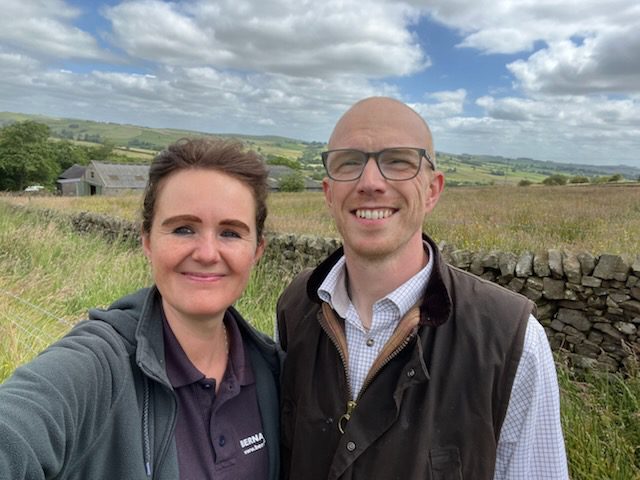
The benefits to farming with this approach are far and wide. Nature-friendly farming particularly suits our wet, upland farm – it is not productive land and commercial breeds of cattle and sheep would struggle to grow well on it and be unlikely to cope in our inclement weather and harsh winters here. This approach suits us a young (ish!) and large family – Pa works off-farm, like many tenant farmers have too. And as a family we would struggle to keep up with the additional work load of an intensive, commercial farm. We are tenant farmers which means we rent our farm because neither of us is from a farming family and there is therefore no family farm to run. We both wished to create an opportunity to start our own farm from scratch, and raise a big family who get to grow up in the farming community, and securing our tenancy with the Peak District National Park has provided us with the opportunity we had been working towards. We have hopes and plans to expand, as well as offer therapeutic access visits to the farm and these are things that we are working on next. We have some concerns for the future, as to farm in this way requires financial support and at present we are in receipt of the 2025 SFI (Sustainable Farming Incentive) agreement. Looking at the 2026 offer and seeing up to 20 options now removed is a worry but hopefully our open-minded approach, diversifying and multiple enterprises will keep us in options. However, an exciting opportunity for nature, conservation and food production is about to arise as we are about to collaborate with the PDNPA, 20 other local farmers and landowners and Staffordshire Wildlife Trust in a new 20 year DEFRA project – the Morridge Hill Country Landscape Recovery Project and this video explains the objectives further which can be viewed at https://youtu.be/Zyes1KarV90 .